
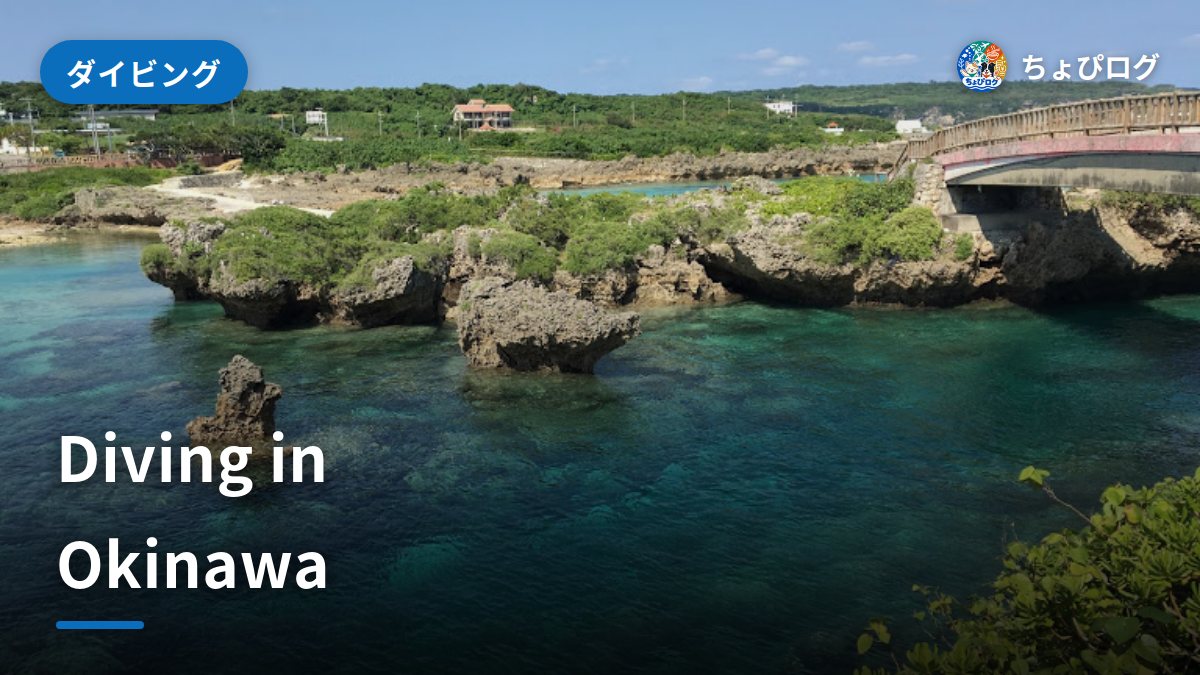
Okinawa is where most people in Japan learn to love the sea, and it is where we did too. We lived on Miyakojima, and through 2023 Choppy was in the water almost every day from April to November — snorkelling before breakfast, coming home with salt in her hair. So this is not a brochure. It is what we would tell a friend flying in from abroad who wants to dive or snorkel in Okinawa and does not know where to start.
Okinawa is not one place. It is the main island around Naha, the tiny Kerama islands a short ferry away, and the far-south islands of Miyako and Ishigaki, each a separate flight and a different kind of sea. This guide covers which one suits which diver, when to go, how the water temperature and typhoons work, and the parts a first-time visitor to Japan usually misses — like why you should never dive on your last day.
The short version: which Okinawa sea for which diver
If you only remember one thing: the main island (Naha) is the easiest first trip, and the outer islands are worth the extra flight once you know what you want to see. Here is how we'd sort them.
| Where | Getting there | Known for | Best for |
|---|---|---|---|
| Okinawa main island (Naha) | Fly to Naha, then drive | The "Blue Cave" at Cape Maeda; day boats to Kerama | Your very first dive — most shops, most English support |
| Kerama Islands | High-speed ferry or day boat from Naha | "Kerama blue" clarity, sea turtles | Turtles without staying on a remote island |
| Miyakojima | Direct flight; rent a car on arrival | Cave and arch "terrain" dives, huge visibility | Divers who love dramatic underwater scenery |
| Ishigaki | Direct flight from Tokyo/Osaka | Manta rays at "Manta Scramble" | Seeing a big animal — and island-hopping the Yaeyama |
All four are warm. The real difference is the flight, what you want to see, and how much of the trip you want to spend travelling versus in the water.
Miyakojima: the sea we lived next to
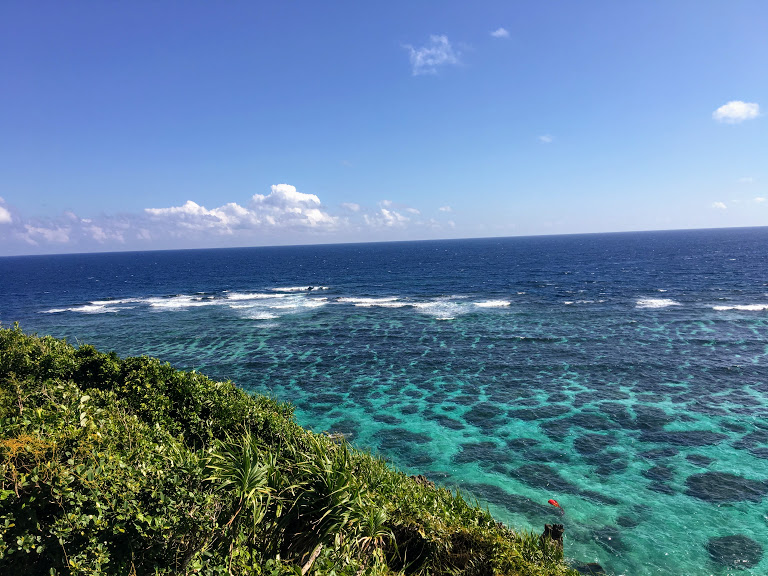
Miyakojima is famous for a colour. Locals call it "Miyako blue", and the first time you see it you tend to go quiet. There are no big rivers on the island, so almost no soil washes into the sea, and the whole island sits inside coral reef — those two things together make the water astonishingly clear.
Underwater, Miyako is known for terrain: caves, arches and cracks where light pours down in shafts. It is spectacular, but it means many of the best sites are boat dives for people with some experience. If you are brand new, that is fine — you start shallow and shore-based, and work up to the dramatic stuff.
For snorkelling and easy shore entries, a few beaches stayed on our regular list. Shigira Beach had the highest chance of a sea turtle turning up, and it has lifeguards in season, which is reassuring if you are nervous. Aragusuku Beach is shallow a long way out and is the easiest place to find clownfish — if someone in your group wants to meet "Nemo", go there. And the cove at Ingya Marine Garden is calm and glassy, good for a first face-in-the-water. One honest warning from living there: do not swim past the marked areas or the far side of headlands. Rip currents are real, and in summer there can be jellyfish.
Miyako has almost no useful public transport for reaching beaches, so rent a car. We say that as former residents: without one, half the coast is out of reach.
Choppy: Standing on the cliff and seeing the coral through the water — I still remember that.
Log: And you didn't even need a boat. Half of Miyako's magic is visible from shore.
Ishigaki and the main island
If there is one animal that pulls divers to Ishigaki, it is the manta ray. A site called "Manta Scramble" is where you have a real chance of watching mantas glide overhead. There is a catch worth knowing: manta sites can have current, so whether a first-timer on an introductory dive can go there depends on the shop and the sea that day — ask when you book. Ishigaki is also the gateway to the Yaeyama Islands, so it pairs beautifully with a day on Taketomi or Iriomote.

The main island around Naha is the softest landing for a first dive. Cape Maeda's "Blue Cave" is a well-known beginner-friendly shore site, there are more shops than anywhere else, and you can take a day boat out to the Kerama Islands without staying overnight. Kerama's water is so clear it has its own name too — "Kerama blue" — and turtle sightings are common. If you want turtles and clear water but only have a few days, a Kerama day trip from Naha is the efficient choice.
When to go: water temperature and typhoons
Here is the number that surprises visitors: Okinawa stays warm enough to dive year-round. These are rough averages — the actual water temperature moves day to day, so check before you go.
| Area | Winter (Jan–Mar) | Summer (Jul–Sep) | Note |
|---|---|---|---|
| Okinawa / Miyako / Ishigaki | approx. 21–22°C | approx. 28–29°C | Most shops dive all winter in a thicker wetsuit |
Source: sea-surface temperatures around Okinawa from the Japan Meteorological Agency (as of September 2026).
Winter in Okinawa is roughly as warm as a Tokyo swimming pool in high summer — a good winter surprise. Shops add a hood and gloves; you do not need to own any of it, since rental gear is standard. The upside of the off-season is space: fewer people means more attention from your instructor and calmer photos.
The real thing to plan around is not cold, it's typhoons. Okinawa's typhoon season runs roughly July to October. A typhoon doesn't just cancel a dive; strong wind and waves can shut the sea for a day or two. Rain alone is fine — once you are underwater, rain doesn't matter, and the decision to cancel is always the shop's, never yours. Our advice: build one spare day into the trip. If a dive gets pushed, you can still catch it. For how weather cancellations and refunds usually work in Japan, our guide to hotel cancellation fees in Japan covers the same logic for accommodation.
Never dived before? Snorkel first, then a try-dive
You do not need a licence, and you do not need to be a strong swimmer, to get in the water in Okinawa. There are two easy on-ramps.
Snorkelling is the gentlest. Mask, snorkel, fins, a shallow beach where your feet touch the bottom — that's it. On the clear Okinawan reefs you can see coral and fish from the surface, and if breathing through a snorkel feels strange you can just stand up. Honestly, we often did nothing but snorkel on a first day and let ourselves get used to the sea.
A "try-dive" (introductory dive) is the next step: an instructor takes you underwater with no certification, starting in a shallow spot and practising ear equalisation before you go deeper. Tell the shop in advance if you can't swim well — they arrange for it, and beginner dives avoid sites with current. Prices vary a lot between shops depending on whether it's a beach or boat dive, so compare on a booking site rather than trusting one quote.
Getting a certified licence on your trip
You can earn an open-water certification (a "C-card") during an Okinawa holiday, and plenty of visitors do. Two things make or break the plan.
Do the classroom part at home. An open-water course has three parts — theory, pool skills and open-water dives. The theory can be done before you fly: PADI offers eLearning you finish on your phone or laptop at home (PADI Open Water Diver course, as of September 2026). Do that first and you spend your whole trip in the sea instead of at a desk. With the theory done, most shops finish the in-water training in about two to three days.
Do not dive on your last day. This is the one people get wrong. After diving, dissolved nitrogen needs time to leave your body before you fly. The Divers Alert Network recommends waiting at least 18 hours after multiple dives over several days before flying (DAN — Flying After Diving, as of September 2026). A course means several dives over several days, so keep your last day dry — shopping, a beach walk, the market. Build the schedule backwards from your flight home.
Practical notes for first-time visitors to Japan
A few things that trip up overseas travellers specifically:
Book ahead, and expect to confirm. Good shops fill up in summer. Booking online in advance is normal, and the shop may phone or message you the day before with the meeting time and a weather check — keep your phone reachable. That is where a working data plan matters; if you haven't sorted connectivity, see our Japan eSIM guide.
Cash still matters outside the cities. Big shops take cards, but smaller island operators and beach kiosks can be cash-only. Carry some yen.
Tipping is not a thing. You do not tip your dive guide in Japan. A genuine thank-you is the custom, not an envelope. It can feel strange at first if you are American, but nobody expects it.
Where to stay. On the outer islands, staying near your dive base saves a lot of driving. You can search Okinawa hotels on Trip.com and compare by area before you lock in a shop.
FAQ
Can I dive in Okinawa in winter?
Yes. The water around Okinawa, Miyako and Ishigaki stays around 21–22°C even in January to March, and most shops dive all winter with a thicker wetsuit, hood and gloves (all rentable). Winter is quieter and often clearer — just check the day's conditions, as strong wind can still cancel a dive.
Do I need to be able to swim, or have a licence?
No to both, for snorkelling and introductory try-dives. An instructor stays with you and you start in shallow water. Tell the shop when you book if you're an anxious or weak swimmer so they can plan for it. You only need a certification for independent "fun dives".
Which Okinawa island should a first-timer pick?
For an easy first trip, the main island around Naha — the most shops and English support, with day boats to clear-water Kerama. Choose Ishigaki if seeing a manta ray is the dream, or Miyakojima if you want dramatic underwater scenery and the famous "Miyako blue".
Our honest take after living there: pick the sea by what you actually want to feel. Turtles and easy clarity — go to Kerama from Naha. A manta overhead — Ishigaki. That quiet, coral-through-the-water blue we still miss — Miyakojima. Whichever you choose, start shallow, keep a spare day for weather, and leave your last day out of the water. Then book a shop, and let Okinawa do the rest.