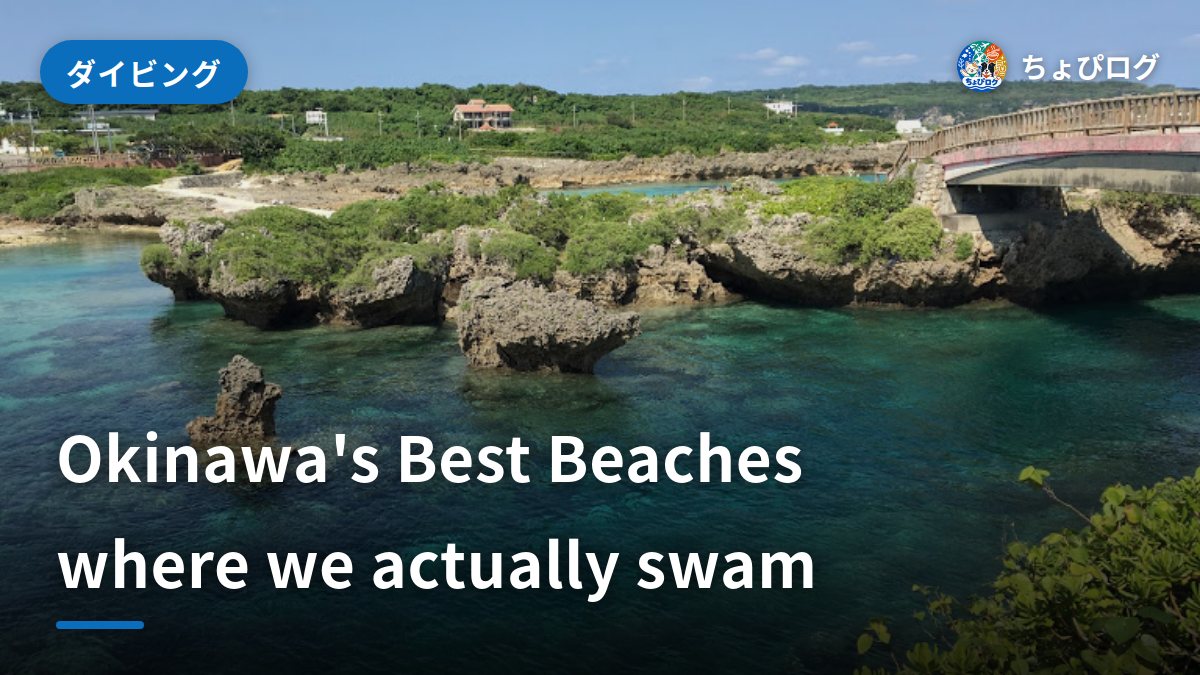
People search for "the best beaches in Okinawa" and get a list of names with no sense of what any of them are actually like to swim at. We can only fix that for one corner of Okinawa, but we can fix it properly: we lived on Miyakojima, and through 2023 Choppy was in the water almost every day from April to November — snorkelling before breakfast, coming home with salt in her hair. So these are not beaches we looked up. They are beaches we swam at, again and again, and this is what we'd tell a friend flying in from abroad.
Here you'll get how "Okinawa" is really laid out, the seven Miyakojima spots we kept going back to (with a comparison table), when to come, and the safety and packing details that catch first-time visitors to Japan — the coral, the summer jellyfish, the tides, and why almost none of these beaches have a lifeguard.
What "Okinawa" actually means for a beach trip
Okinawa is not one island. It's the main island around Naha, plus far-flung southern islands like Miyako and Ishigaki, each a separate flight and a different sea. "Best beaches in Okinawa" lists tend to mix them all together, which is useless when they're a plane ride apart. We lived on Miyakojima, a direct three-hour flight from Tokyo (Haneda), and that's the island we can speak for honestly.
A few things nobody tells you before you land, and they matter:
- You need a car. There are no trains on Miyakojima and the good beaches are spread around the coast. Rent a car at the airport — without one you'll see almost nothing.
- Bring cash. Cards work at hotels and big restaurants, but beach shacks, small rental huts and some parking are cash-only. Japan is far more cash-based than most visitors expect.
- No lifeguards, mostly. A couple of resort beaches have staff in season; most don't. You are responsible for yourself out there.
- No tipping. Not at restaurants, not for a dive guide. It isn't expected anywhere in Japan and can cause confusion.
- Get data before you drive off. You'll live on the map app finding these beaches. Sort out a Japan eSIM before you land — see our Japan eSIM guide for how.
The seven Miyakojima beaches we kept going back to
Miyakojima is famous for a colour. Locals call it "Miyako blue", and the first time you wade in you tend to go quiet. There are no big rivers on the island, so barely any soil washes into the sea and the water stays absurdly clear. Here's how we'd sort our seven, by what you actually want out of a swim.
| Beach | Best for | Gear & facilities (2023) | Our note |
|---|---|---|---|
| Ingya Marine Garden | Clear water & lots of tropical fish, in a sheltered cove | No rentals or showers; free parking | Don't swim past the bridge — there's a rip current |
| Aragusuku Beach | Families; finding "Nemo" (clownfish) | Rentals & showers in season; free parking | Very shallow and very touristy — easy first swim |
| Yoshino Beach | Fish that swim right up to you | Rentals nearby, showers; paid parking + shuttle | Skip it if fish crowding you sounds stressful |
| Nakanoshima Beach (Irabu/Shimoji) | Diving down rather than floating | No facilities; free parking | Small and packed in high season — go early |
| Shigira Beach | Turtles, with staff on the sand | Rentals & showers; free parking | Resort-run but open to non-guests |
| Waiwai Beach | Turtles up close, fewer people | No facilities; free parking | Swim past the tetrapods — that's the good bit |
| Yabiji reef | The most beautiful water on the island | Boat tour only (from Hirara or Ikema) | Not a beach — a coral reef you reach by boat |
For an easy first swim: Aragusuku and Yoshino
If it's your first day and you just want to float over fish, go to Aragusuku Beach. It's shallow a long way out — when we were there you'd see people sitting in the sea far from shore — so it's kind to weak swimmers and children, and there are usually clownfish near marked spots. Anyone hunting for "Nemo" finds them here fastest. Next door, Yoshino Beach has the friendliest fish on the island; they genuinely come to you. Choppy loved that; if the idea of fish swarming your legs makes you tense, pick somewhere else.
For clear water and a walk: Ingya Marine Garden
Ingya is a natural cove, so the water is calm and glassy and full of tropical fish. Cross the little bridge and there's a walkway to a lookout with the whole ocean on the far side — lovely at sunrise or sunset. One firm rule from us: don't swim beyond the bridge. There's a rip current out there that can pull you straight out, and jellyfish show up in summer. Stay in the cove and it's one of the gentlest, prettiest swims on Miyakojima.
For turtles: Shigira and Waiwai
This is the part people remember. Both Shigira Beach and Waiwai Beach sit within the Shigira resort area on the south coast, and both have a high hit-rate for sea turtles. Shigira is the safer choice with a family: it's run by the resort but open to everyone, and in 2023 there were leisure staff on the sand until around 5pm (6pm in peak season). Waiwai is the quieter, wilder one — there are no facilities, and the good water is past the tetrapods rather than the first stretch of sand.
Waiwai is where the sea gave us our best moment. Choppy was snorkelling not far out when a turtle glided along directly beneath her — close enough to count the scutes on its shell. We caught it on camera.
The turtles here aren't only in deep water; they come into the shallows too, which is why you end up so close. Keep your distance, never chase or touch one, and let it come to you. If you'd rather learn to breathe underwater and meet them properly on a dive, our diving in Okinawa guide walks through try-dives and which island suits which diver.
For the best water of all: Yabiji
Yabiji isn't a beach, and it's the one we'd send you to if you only did one thing. It's Okinawa's largest coral reef group, out past Ikema Island to the north, reachable only by boat tour from Hirara Port or Ikema (and only when the sea is calm — it's a fragile, exposed area). It's about an hour out by boat, nobody swims there day to day, and the clarity is unreal. On our tour we stopped at three spots over a half-day, with lunch and snacks on board. It costs more than a beach day, but it was the most beautiful sea Choppy saw in her whole time on the island. If you love the water, go once in your life.

If we only had two days, which beaches?

Aragusuku or Ingya to warm up, Waiwai for turtles, and a Yabiji tour if the sea's calm. That's the island in three swims.
When to go
The Miyakojima swimming season runs roughly April to November; that's when Choppy was in the water almost daily. Summer (June to September) is hottest and clearest but also typhoon season — a storm can wipe out a boat tour or a whole beach day, so build slack into your dates. Spring and autumn are calmer and less crowded, with water still warm enough for long snorkels. Whenever you come, check the tides: the same beach changes completely between high and low water. Low tide is shallower and brings you nose-to-nose with fish; high tide gives more room to swim but rougher water on windy days.
How to stay safe in the water
The sea here is beautiful and it is not a swimming pool. The things that actually catch people out:
- Coral. It's alive — never stand on it or touch it. It cuts, and you damage a living thing. Wear a rash guard and secure, strap-on sandals you can keep on in the water. Choppy wore TEVA sandals for exactly this.
- Jellyfish. Summer brings the Portuguese man o' war (Japanese: katsuo-no-eboshi). Its sting is serious — get proper first aid and see a doctor if needed.
- Sharks. Rare, but there have been summer sightings at some beaches. Check local notices and avoid any beach with a recent sighting.
- Sun and heat. Miyako sun is brutal. You forget it while you're floating, but your head is in full glare — drink often, and reapply reef-friendly sunscreen. Don't jump in wearing just a swimsuit like you might back home; a rash guard saves your skin.
- Rip currents. Obey the local "don't go past this point" rules — at Ingya, that means the bridge.
What to bring
Several of these beaches have no shop, no vending machine and no shower, so pack before you drive out:
- Water — buy drinks before you go; there may be none nearby.
- A towel and a rash guard — the rash guard is non-negotiable for sun and coral scrapes.
- Reef-safe sunscreen to reapply.
- A bottle of water to rinse sand off — handy where there's no shower, and it keeps your rental car clean.
- Mask and snorkel. This is the one that changes everything — Miyako's sea is wasted without them. A basic set is around ¥2,000 (about $14) as of September 2026; serious snorkellers spend ¥10,000+ (about $70) on a brand like Gull. If you'd rather not carry gear, the staffed beaches (Aragusuku, Shigira) rent it in season.
FAQ
Which Miyakojima beach is best for seeing sea turtles?
Shigira and Waiwai on the south coast. Shigira is the easier, staffed option; Waiwai is quieter but has no facilities and the turtles come surprisingly close. Never chase or touch one — keep still and let it pass.
Do I need to be a strong swimmer?
Not for the shallow beaches. Aragusuku and Yoshino are shallow far out and fine for cautious swimmers and kids. Deeper spots like Nakanoshima and boat sites like Yabiji suit confident swimmers or people who want a guide. If you can't swim but still want to meet the fish, a guided try-dive is an option — more in our diving licence guide.
Can I get to these beaches without a car?
Realistically, no. Miyakojima has no trains and buses are sparse, so rent a car at the airport. It's also how you chase the good weather and tides from one beach to the next.
Before you book
Pick two or three beaches by what you want — an easy float, turtles, or the Yabiji reef — and base yourself somewhere central so you can follow the weather. When you're ready to sort a room, you can compare Miyakojima hotels on Trip.com. Then get your data sorted, throw a rash guard and a mask in your bag, and go find your own "go quiet" moment in the Miyako blue.